
With the application of cold chain technology in fresh logistics, more and more high-quality seafood can travel across land and time to the kitchens of more families, and the ranks of seafood parties are getting stronger and stronger, but how much do you know about the doorways in seafood? Do you dare to try a more extreme way to eat seafood? Today I will take you to get these fresh knowledge and subvert your understanding of seafood every minute!
【Seafood Cold Knowledge Group】
1. “King crab" is not a crab?
Real crabs have four pairs of feet plus a pair of crab pliers. We can look at pike crabs, hairy crabs and snow crabs. These real crabs have 8 legs and 2 pliers. The king crab has only six legs and two pliers, so they are not the same species, just like crayfish and Boston lobsters (crayfish family) are not lobsters (lobster family) is the same truth.
2. Oysters can also produce pearls
We all know that Ha mussels and mussels can produce pearls, and even professionals in pearl production. But few people know that oysters can actually produce pearls, but the probability is relatively low. There have been news all over the country that diners have eaten pearls from oysters during their diet, so you can buy the oysters home in the future and take a closer look when you eat them.
3. Lobsters are immortal
When many organisms divide cells, telomeres will continue to shorten. (The role of telomeres is to maintain the integrity of chromosomes and control the cell division cycle) When they are shortened to a certain extent, cells will begin to apoptosis. But lobster, a magical species, various tissue cells in the body will continue to secrete something called telomerase, and telomerase can grow telomeres, so lobster cells will not stop dividing due to shortening of telomeres. This is also the reason why lobsters live forever.
4. Crabs can also have long legs
Most crabs have short legs and frequently change their steps, but Gan's giant chelated crabs, which live at a deep bottom of 500-1000 meters off the coast of Japan and Taiwan, China, have enviable long legs. The largest specimen has a length of 4.2 meters, a body length of 38 cm, a weight of 20 kg, and a life span of 100 years after its legs are unfolded. The giant chelated crab of Gan's family seems fierce, but in fact it does not have the ability to swim or float. It can only crawl and forage at an unhappy speed on the bottom of the sea, and it is not good for humans.Be aggressive.
【Extreme Eating Group】
1. Korean live octopus
Octopus can be said to be the most tenacious seafood. Its brain and nervous system are very special. Even if its tentacles are completely chopped off, it can still move independently. Therefore, such a “rich” dish was born in Korea-eating live octopus raw. When eating octopus raw, it is usually served with some sauce or sesame oil. After eating it in the mouth, the tentacles of the octopus will continue to squirm energetically in the mouth, which can be said to be an extraordinary feeling.
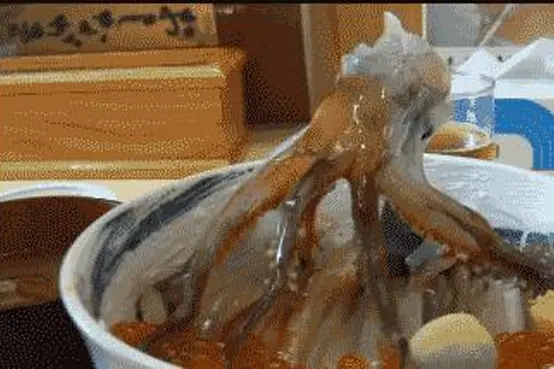
However, there are certain risks in eating live octopus. If you have time to bite the octopus's suction cup before entering the mouth, the suction cup is likely to be adsorbed on the esophagus and cause danger. Therefore, as long as you put the live octopus in your mouth, you must stop hesitating. You must bite it steadily and quickly.
2. Japanese tuna eyes
Early warning ahead, beware of intensive phobias.
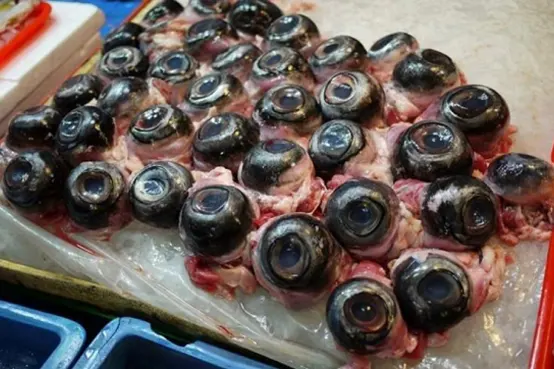
Regarding tuna, we eat the most tuna salad, but we don't know that the eyes of tuna are actually very popular seafood! Dip it in some sauces and eat it raw. It is said that the taste is very stimulating, but if you don't have a certain psychological quality, I'm afraid it will be difficult to try.
3. Japanese salt and spices
Shioxin is a Japanese dish. Long strips of squid or squid are often used. The internal organs are taken out and cut into thin strips or filaments. Then put the pulled out internal organs with salt, air-dry overnight and mash them into a meat puree, mix the previous filaments and stir together, and finally add cuttlefish juice to seal and ferment. The color of Yanxin is close to the flesh color of the skin. A bowl of Yanxin is placed in front of you, and the strips of viscous matter are intertwined, making it visually weird.
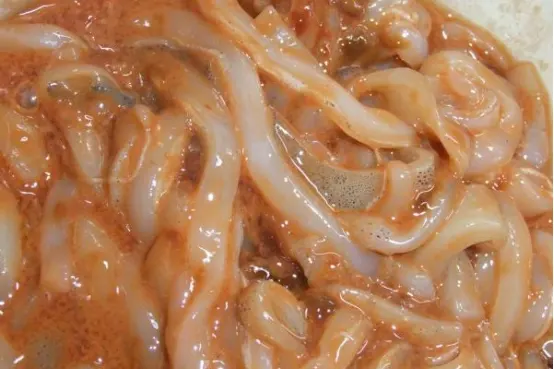
In terms of taste, salt and spices retain the fishy smell of the sea goods themselves, as well as the rotten taste brought about by fermentation. If you eat it directly, you can imagine how sour and refreshing it is. Therefore, in Japan, salt and spices are actually a side dish. A mouthful of salt and spices, a mouthful of sake or visa, is the most common.How to eat.
【"Top" Taste Group】
1. Swedish pickled herring
The odor of pickled herring is already well-known all over the world. NHK has used instruments to measure the odor value of salted herring, and the measurement result is as high as 8070Au; the odor index of stinky tofu, which also has a strong odor, is only 420Au. In other words, this is a food that is 20 times more smelly than stinky tofu! The smell of the finished Swedish salted herring is extremely strong, including the pungent smell of propionic acid, the rotten egg smell of hydrogen sulfide, the rancid grease smell of butyric acid, and the vinegar smell of acetic acid. Not to mention eating it, you can imagine its taste when you see these words.
2. Scandinavian alkali fish
In Scandinavia, people soak cod or white salmon in a strong alkaline solution. After many days, the strong alkaline solution breaks down the protein of the fish and swells it into large jelly-like substances. If the soaking time is too long, the fat of the fish will even turn into soap! ! After that, the fish soaked in the alkaline solution need to be soaked in fresh water for another week before it can be safely eaten. The pH value of alkaline fish reaches 12, and its alkalinity is 100,000 times that of water, which is extremely corrosive. If silver tableware is used, the tableware will be corroded.
3. Icelandic smelly shark
Stinky sharks are actually decomposers of sharks.
The Icelanders cut the captured sharks in the waters of Greenland into pieces and exposed them to the sun for four months. This is not over yet. After the exposure is over, they have to bury the shark meat in the sand and let it ferment through their own body fluids until the shark meat is completely soft. The shark meat that has gone through this series of tortures is slightly rough and chewy, and the taste of the meat is full of a strong sea smell. If you take a bite, you will feel a little bit sore. If you don't like to eat stinky tofu and stinky mandarin fish, and you have the ability to tolerate the stinky smell, this stinky shark still has to try carefully.
To tell you the truth, in the process of taking stock of these cold knowledge and various ”extreme" delicacies, I sighed at the richness of seafood while sighing at the creativity of mankind in the matter of “eating”. Are there any students here who have eaten these? Please share a wave of knowledge and experience!