Size/specification: 28-40 heads/kg
Bamboo shrimp are mostly distributed in Hokkaido, Japan, to the southern Yellow Sea, Zhejiang, Fujian, Taiwan, Guangdong, China, the Philippines, Singapore, northern Australia, India, eastern Africa, and the Red Sea.
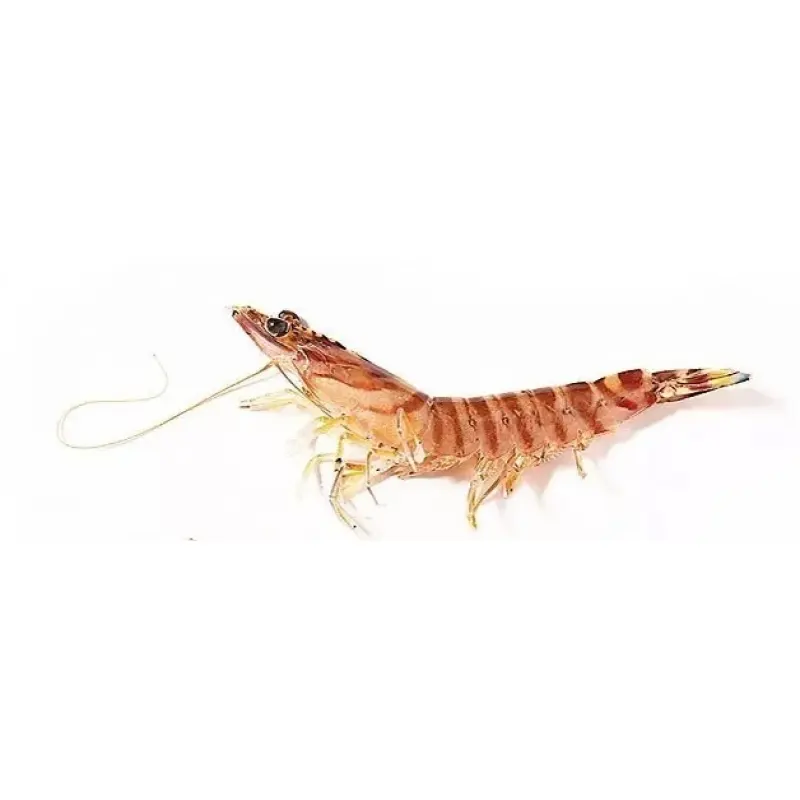
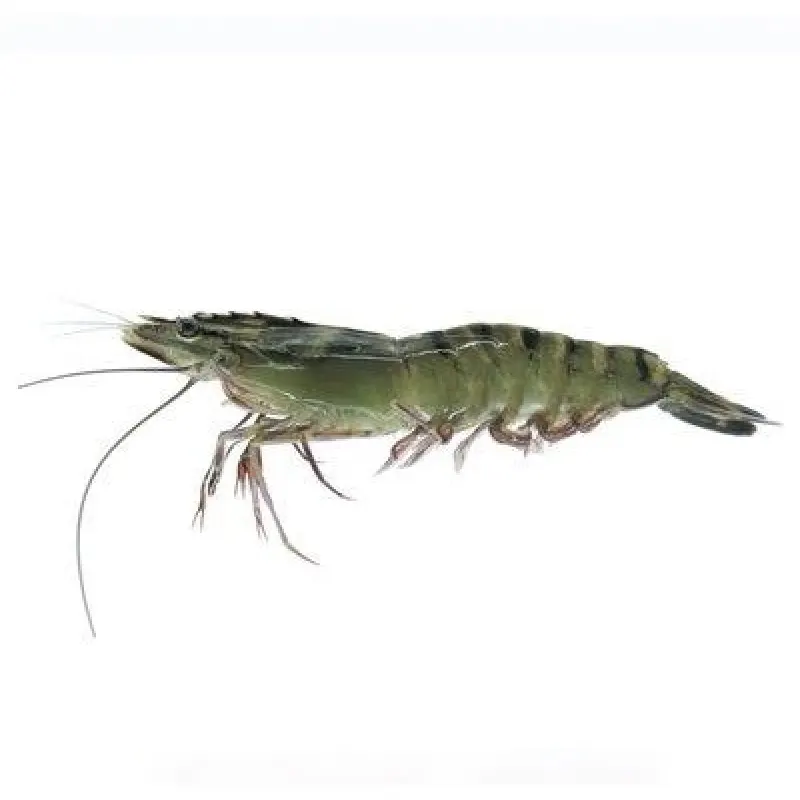
The body of the slub shrimp is light yellow, with blue-brown horizontal stripes, and the tip of the tail is bright blue. The carapace is thicker and the forehead is slightly curved and arched. Bamboo shrimp is an important breeding variety, and its weight can reach more than 20 grams after about 6 months of breeding. There are artificial farming along the coasts of Fujian and Guangdong in southern China.
Nutritional value
The meat content of bamboo shrimp was 39.21%, the moisture and crude ash content were 77.16% and 1.79%, respectively, and the protein and fat content were 17.74% and 2.08%, respectively. The total amount of 18 amino acids (TAA) in muscle (dry sample) is 70.68%, and the essential amino acid index (EAAI) is 70.72. Its composition ratio is lower than the egg protein standard, but higher than the WHO/FAO standard. Based on the calculation results of amino acid score (AAS) and chemical score (CS), it is concluded that the first restrictive amino acid of Japanese prawns is tryptophan and the second restrictive amino acid is valine. The total amount of the five umami amino acids (DAA) was 35.71% (dry sample). Japanese prawns have a high content of unsaturated fatty acids, accounting for 64.04% of the total fatty acids, of which eicosapentaenoic acid (EPA) and docosahexaenoic acid (DHA) are 1.70% and 10.92%, respectively. The content of polyunsaturated fatty acids and EPA and DHA is higher than that of several other economic shrimp.and freshwater fish. It is rich in iron and zinc, and low in harmful elements such as cadmium, chromium, and nickel.

-1.webp)
.webp)